What Does It Mean When a Medical Report Is Positive?
For many people in Bangladesh, receiving a positive result on their medical report causes immediate worry and confusion. However, the word “positive” in medical terminology does not always carry a negative or alarming meaning. Understanding what a positive result actually indicates can help you respond calmly and make the right decisions.
If you have recently completed a medical report check and received a positive finding, this complete guide will explain everything you need to know in simple and clear language.
Understanding a Positive Medical Report
In medical terms, a positive result indicates detection. It means the laboratory or diagnostic test has found evidence of a virus, bacteria, chemical substance, hormone, or genetic indicator inside the sample that was provided for testing. This is one of the most misunderstood concepts in health testing, especially among people in Bangladesh who are preparing for international work visas or residency permits in Gulf countries. Here are a few easy examples to explain this concept clearly:
- A positive COVID-19 test confirms the presence of the coronavirus in your body
- A positive diabetes test shows blood sugar levels that are higher than the normal range
- A positive cancer screening suggests the presence of abnormal or possibly cancerous cells that need further review
“The test identified what it was checking for, and further evaluation may be needed.”
Common Medical Tests and What a “Positive” Result Indicates
Knowing how different positive results are interpreted across various test types removes a great deal of confusion and unnecessary fear. Below is a clear breakdown of how positive results are understood in the most commonly performed medical tests in Bangladesh and internationally:
| Test Type | Meaning of a Positive Result | Recommended Next Step |
|---|---|---|
| COVID-19 Test | Virus detected in sample | Isolation, medication and monitoring |
| HIV Test | HIV antibodies or virus found | Confirmatory testing and treatment planning |
| Tuberculosis (TB) Test | TB bacteria identified | Chest X-ray and medical therapy |
| Pregnancy Test | hCG hormone detected | Pregnancy confirmation and prenatal care |
| Hepatitis B or C Test | Virus detected in blood | Liver function test and anti-viral treatment |
| Cancer Screening | Abnormal or malignant cells suspected | Biopsy, imaging and full treatment plan |
Each of these results carries a different level of urgency and a different path forward, which is exactly why consulting a qualified doctor immediately after receiving any positive result is absolutely essential.
Why a Positive Result Does Not Always Mean Serious Illness
It is very important to understand that a positive test result does not automatically confirm a diagnosed disease. In many cases it simply signals that further testing is required before any final medical conclusion can be reached. Consider the following important points:
- A positive cancer marker does not automatically mean cancer is present. It signals the need for a biopsy or imaging scan to confirm
- A positive genetic test may reveal only a risk factor rather than an active or currently developing disease
- Some tests can produce false-positive results, particularly in the case of early-stage screening tests that require further confirmation
That is why doctors always recommend confirmatory or follow-up tests before making any final diagnosis. Relying solely on a single positive result without proper medical consultation is one of the most common and dangerous mistakes patients make when receiving their reports.
What Should You Do After Receiving a Positive Medical Report?
Getting a positive medical result can feel overwhelming and frightening, but staying calm and following the correct steps is absolutely crucial for your health and wellbeing.
Speak With Your Doctor
Your doctor will explain exactly what the positive result means for your specific case, taking carefully into account your personal symptoms, medical history, age, and background before drawing any conclusions.
Undergo Follow-Up Testing
Depending on the nature and type of the condition detected, additional follow-up tests may be advised. These commonly include the following:
- Blood tests for confirmation of the initial positive finding
- Imaging scans such as a CT scan or MRI for internal examination
- Biopsy procedures for any suspected tumor or cancerous tissue
Begin Treatment If Needed
Once a diagnosis has been properly confirmed through all necessary tests, your doctor will then suggest an appropriate and personalised treatment plan. Depending on the condition this may include medication, lifestyle adjustments, ongoing therapy, or in certain cases a surgical procedure.
Make Lifestyle Improvements
Regardless of the specific condition identified, making positive lifestyle changes can significantly support your recovery and overall health:
- Eating a well-balanced and nutritious diet every day
- Reducing daily stress through relaxation and regular exercise
- Completely avoiding smoking and alcohol consumption
- Committing to regular health monitoring and scheduled check-ups
Is a Positive Medical Report Always Bad News?
Not necessarily. In certain specific situations, a positive result can actually represent good or even wonderful news, depending entirely on which test was performed and what it was designed to detect in the body.
- A positive pregnancy test is a moment of great happiness and celebration for many families expecting a child
- A positive antibody test may indicate that your immune system has successfully developed strong immunity after a past infection or vaccination
This is why fully understanding the context of the test is just as important as reading the result itself. Always review your results with a qualified healthcare professional rather than drawing your own conclusions based on fear or incomplete information.
Positive vs Negative Medical Reports Explained
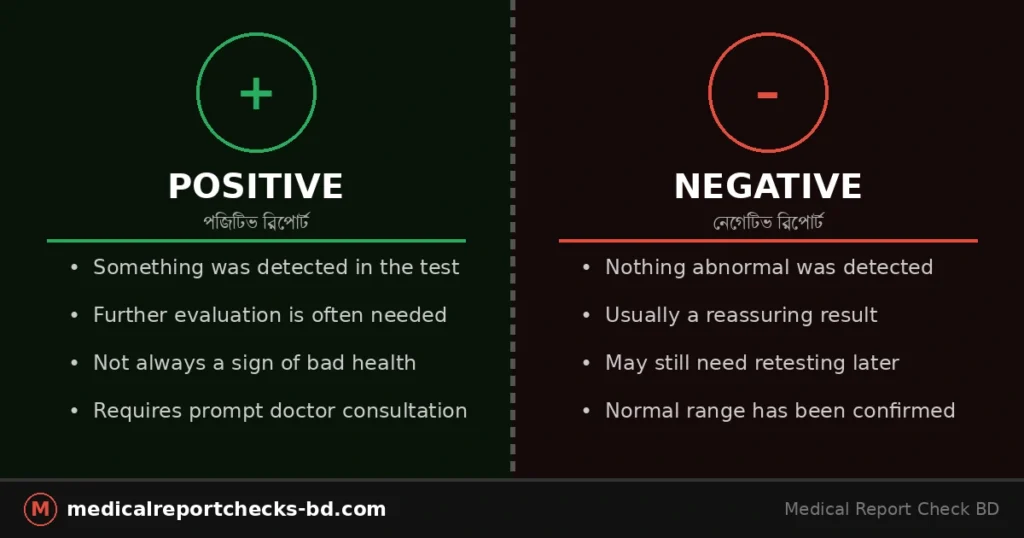
Understanding the fundamental difference between a positive and a negative medical result is one of the most important steps in correctly interpreting your health findings. A positive result means that something was detected by the test, such as the COVID-19 virus being found present in the sample.
A negative result means that nothing abnormal was detected and that no infection, virus, or disease indicator was identified in the tested sample. While a negative result generally suggests that your health is within a normal range, a positive result signals detection only and is not necessarily a confirmed final diagnosis.
Both outcomes serve as starting points for the next step in your personal healthcare journey rather than final verdicts. For anyone in Bangladesh who is navigating the process of overseas medical testing or visa-related health screening, you can visit our medical report check to verify and understand your report status online quickly and easily.
Managing Stress After a Positive Medical Result
Feeling anxious, frightened, or overwhelmed after seeing a positive report is a completely normal and understandable human reaction. However, managing that stress effectively is critically important both for your mental health and for your ability to take clear-headed and constructive next steps toward treatment and recovery.
- Talk openly with your healthcare provider so they can provide full context, professional clarity and a structured path forward based on your specific results
- Share your concerns with a trusted family member or close friend whose emotional support can provide significant relief during a difficult time
- Seek professional mental health support or community support groups if feelings of anxiety become difficult to manage on your own
- Focus entirely on your next actionable medical steps rather than imagining worst-case scenarios that may never come to pass
Early detection through a positive result very often significantly improves treatment success rates and long-term health outcomes. A positive report can therefore be the valuable starting point for your recovery rather than something to fear as a final conclusion.
Frequently Asked Questions
Conclusion
A positive medical report simply means that the test has successfully detected a specific substance or sign such as an infection, virus, hormone imbalance, or abnormal cellular indicator that it was specifically designed to identify, and this result alone does not automatically point to a severe or life-threatening condition nor does it confirm any final diagnosis without further professional evaluation.